Friday, 19 June 2015

Sustainability: Managing Food and Water Resources

Third part of the series on sustainability.  Essentials for life are food, water, air and energy.  The talk deals with managing food and water resources - as for other essentials food and water are under severe stress because of the rising population and over-consumption.  The land area that food can be grown is limited as is the amount of fresh water available on our planet.  Add to this the wasteful ways that we have developed and it is easy to understand that an efficient management of these resources is vital for a meaningful existence of the human species.
In fact, the world food production is sufficient to feed the 7+ billion population that we have currently.  The reason one hears about food shortages is mainly because of the inefficient distribution and poor storage of food.  In the developed countries, food waste is also a major consideration.  A bit more co-operation among nations and some good planning can solve the global food crisis just now.  This statement, however, does not diminish the urgency of planning for a sustainable food supply for the future - and controlling population growth is the most important step one can take.
Water shortage is more difficult to manage as it is not possible to transport water from areas of plenty to water-stressed regions.  Climate change with rising global temperatures will make some areas almost impossible to manage.  When the glaciers melt and are gone on top of mountains, rivers feeding the plains will run dry.  With ground water already dangerously depleted in most area of the world, it is difficult to see how the ever-increasing demands will be met.
New technologies can help but whether they will be there in time to avoid serious catastrophes - we do not know.  I shall discuss these in future publications.
In the following I publish the slides of my 2012 talk in Glasgow.


Sustainability - Managing Climate Change

One of the results of the exploding population numbers and over-consumption is that humans have created a lot of stress on the environment.  Use of mainly fossil fuel has resulted in a build up of the green house gas (carbon di-oxide)  which has warmed the earth over the past 200 years.  While manageable so far, the prognosis is not good as human activities continue unabated, in fact the situation is getting worse; and the effects on earth's climate and all that it entails are beginning to drift into a territory that is very worrying.  A lot of emotive language is being used and the Web and social media is full of some bad tempered polemics relating to climate change.
Only yesterday, the Pope, supported by the US president, came out in favour of some real action to mitigate the effects of climate change.  This is usual occurrence and my cynicism tells me that nothing concrete and helpful will be done by the governments of the world in this direction.
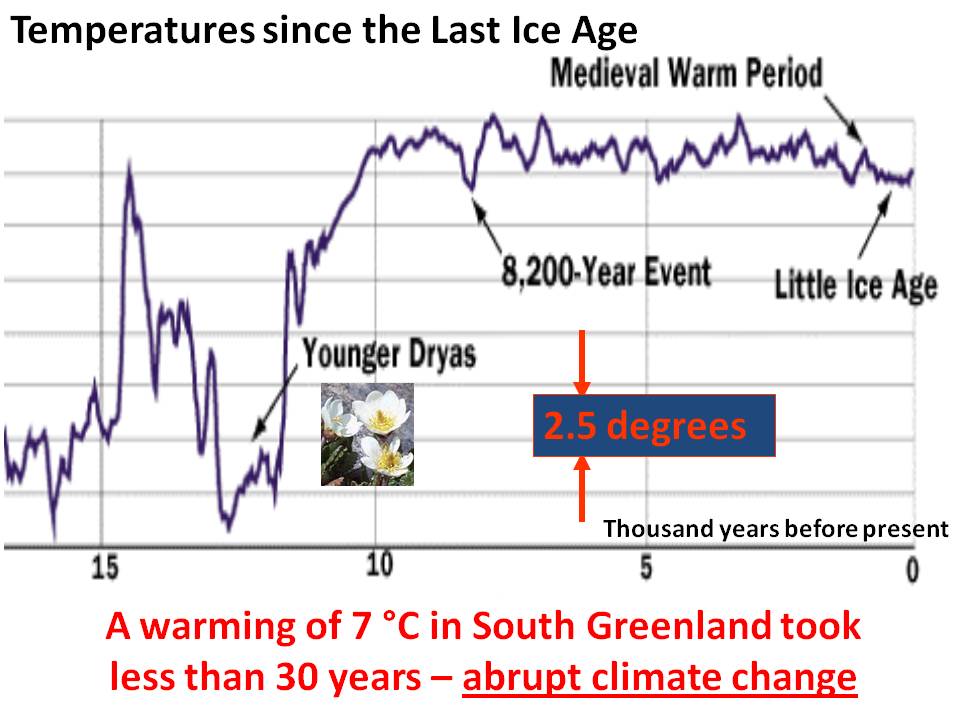
Our only hope really is through new technology - this I shall be looking into in my future blogs.  Just now I publish the slides of my second talk on sustainability from September 2012. This deals with the evidence for climate change and some affordable solutions.  Climate change is a subject that I had covered in detail in a previous series of seven lectures. I shall publish these in the next few weeks.
Please click on the slide to see a bigger image...